For Learners
View Courses

Technology & IT
Mastering Data Science
Course Language: English
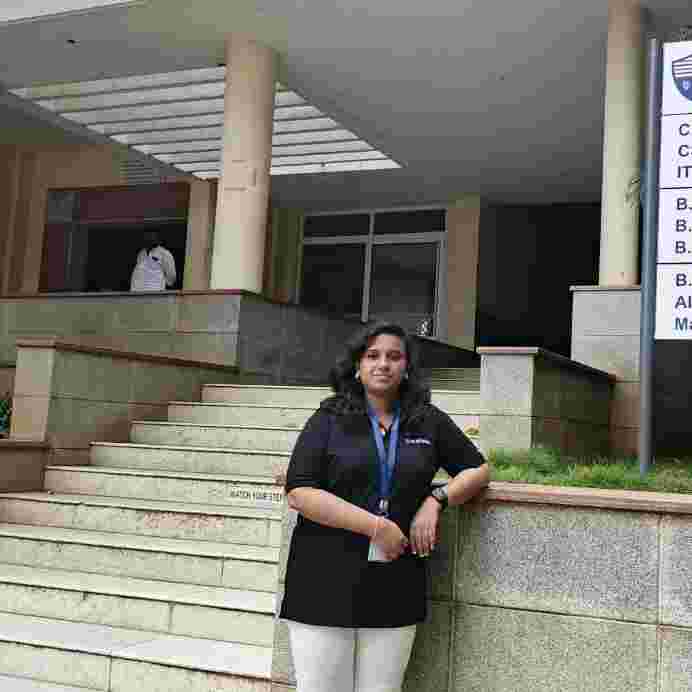
Learn from : Nagasri P
Python, SQL (MySQL, Statistical Analysis, Statistics for data analysis, Machine Learning, Deep Learning, NLP, CNN, R Programming, Artifical intelliiegence
BIO:
Experienced Data Science Trainer with over 8 years of expertise in delivering hands-on training across industries and academic institutions. Specialized in Python, Machine Learning, Deep Learning, and Data Visualization tools such as Power BI and Tableau. Fluent in English and Tamil, with the ability to conduct sessions effectively in both languages to cater to diverse learner groups. Proven track record of designing customized training programs aligned with industry standards and learner needs. Strong communication skills, adept at simplifying complex concepts for learners at all levels.
VIEW FULL PROFILECourse Description:
Course Description:
This course is designed to provide a comprehensive introduction to Data Science using Python, covering essential tools, libraries, and techniques used by data scientists in the real world. Participants will learn how to collect, clean, analyze, and visualize data, as well as apply machine learning algorithms to make data-driven decisions.
Using powerful Python libraries such as NumPy, Pandas, Matplotlib, Seaborn, and Scikit-learn, learners will gain hands-on experience in data manipulation, exploratory data analysis (EDA), statistical modeling, and building predictive models. The course emphasizes practical projects and real-world datasets to solidify concepts and enhance problem-solving skills.
By the end of the course, learners will be able to:
-
Understand and apply the data science workflow
-
Perform data wrangling and analysis using Python
-
Create impactful visualizations to communicate insights
-
Build and evaluate machine learning models for classification and regression tasks
No prior experience in data science is required.
Course Curriculum:
Module 1: Introduction to Data Science
-
Overview of Data Science and its applications
-
The Data Science process and lifecycle
-
Key roles in the data science field
-
Introduction to tools: Python, Jupyter, Google Colab
Module 2: Python Programming Basics for Data Science
-
Basic syntax, variables, and data types
-
Conditional statements and loops
-
Functions and lambda expressions
-
Introduction to key libraries: NumPy, Pandas
Module 3: Data Manipulation Using Pandas
-
Creating and manipulating DataFrames and Series
-
Reading and writing files (CSV, Excel, JSON)
-
Data cleaning: handling missing and duplicate data
-
Sorting, filtering, grouping, and combining datasets
Module 4: Data Visualization
-
Fundamentals of data visualization
-
Using Matplotlib for basic plots
-
Using Seaborn for advanced statistical plots
-
Visual storytelling with charts (bar, histogram, boxplot, heatmap)
Module 5: Exploratory Data Analysis (EDA)
-
Understanding data distributions
-
Summary statistics and data profiling
-
Detecting outliers and anomalies
-
Feature selection and feature engineering techniques
Module 6: Statistical Concepts for Data Science
-
Descriptive statistics (mean, median, mode, variance)
-
Probability and probability distributions
-
Central Limit Theorem
-
Hypothesis testing: t-test, chi-square test
-
Confidence intervals and statistical significance
Module 7: Machine Learning Overview
-
What is machine learning?
-
Types: Supervised vs. Unsupervised learning
-
Machine Learning workflow
-
Training vs. testing data
-
Evaluation metrics: accuracy, confusion matrix, precision, recall, F1-score
Module 8: Supervised Learning Algorithms
-
Linear Regression
-
Logistic Regression
-
Decision Trees and Random Forest
-
K-Nearest Neighbors (KNN)
-
Model training, cross-validation, and performance tuning
Module 9: Unsupervised Learning Algorithms
-
Clustering techniques: K-Means, Hierarchical Clustering
-
Dimensionality reduction: PCA
-
Association rule mining: Apriori algorithm
-
Applications in customer segmentation and recommendation systems
Module 10: Projects and Case Studies
-
EDA on real-world dataset (e.g., Sales, COVID-19, Titanic)
-
Classification project (e.g., churn prediction, email spam)
-
Regression project (e.g., house price prediction)
-
Clustering project (e.g., customer segmentation)
Module 11: Capstone Project
-
Define the problem statement
-
Perform data collection and cleaning
-
Build, test, and evaluate ML models
-
Present findings with visualizations and documentation
12 Weeks
90
DAILY
Course Fee
$523.00
Post Course Support
- Assignments
- Forums
- Quizzes
- Resources
- Recorded Session Videos
Earn a Course Completion Certificate
Add this certificate in your LinkedIn Profile, resume or share it on social media platforms. It helps validate the learner’s knowledge and skills, boosting their resume and increasing their employability.